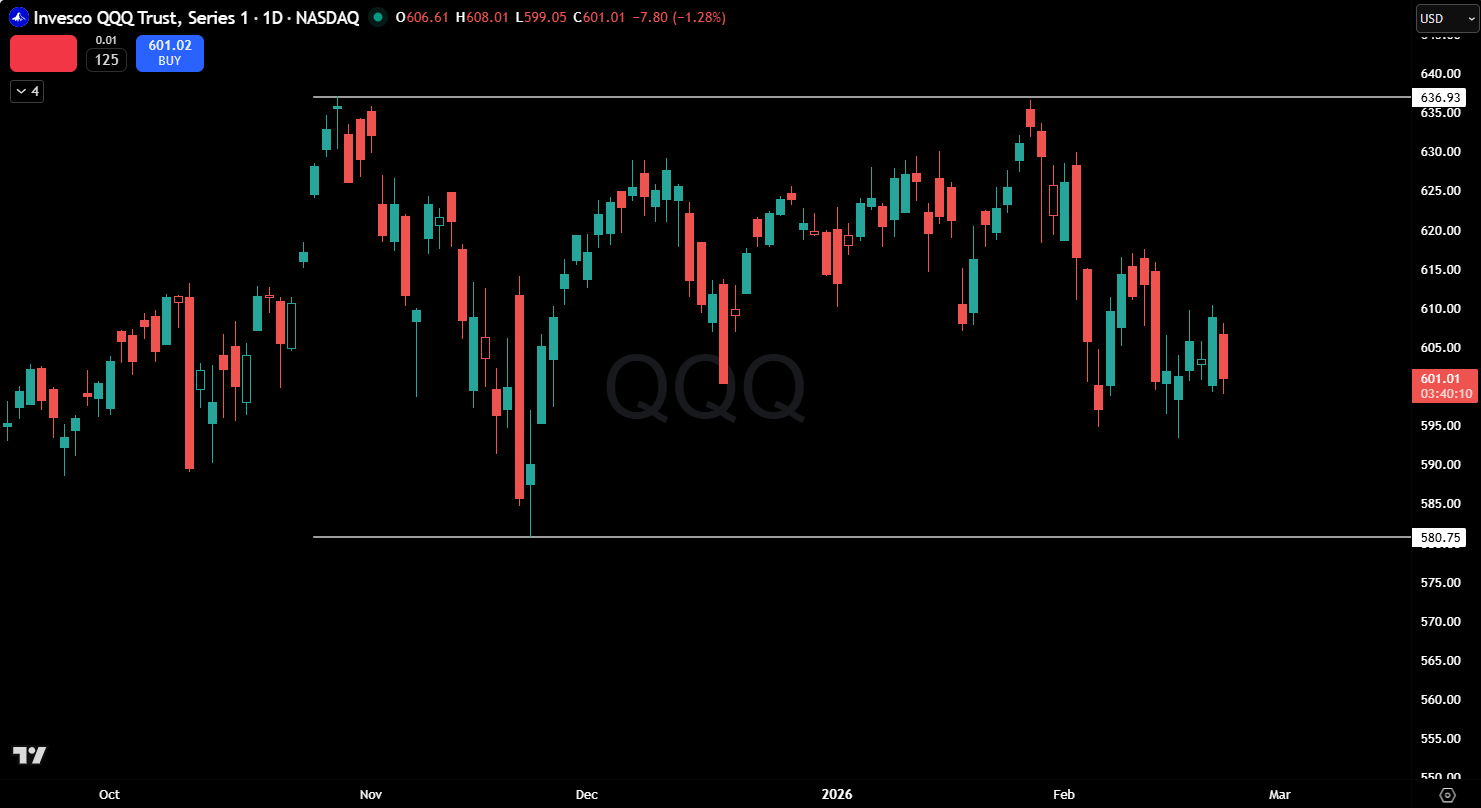
Since October 2025, QQQ and other stocks have been trapped inside a trading range. Every rally stalls. Every selloff gets bought. On the surface, it looks tradable. In reality, this is one of the most psychologically and technically
challenging environments for traders to trade in.
Consolidation is where trends pause and energy builds. But while that energy is building, traders often bleed capital trying to force trades that is simply not there.
When price is stuck inside a range for months, follow through disappears. Momentum fades quickly. Breakouts fail and both swing traders and day traders begin to feel confused, frustrated, and second guessing.
Understanding the environment is the first step to surviving it.
Why Long Term Consolidation Makes Swing Trading Difficult
Swing trading depends on sustained directional movement. Inside consolidation, you get neither.
You buy strength, and price stalls near resistance.
You buy a breakout attempt, and it reverses back into the range.
You hold expecting continuation, but momentum disappears.
There is no sustained trend. There is no institutional urgency pushing price in one direction. Instead, price rotates within a defined range.
Buying and holding inside a range means you are constantly fighting overhead resistance or underlying support. Without price clearly moving in one direction or another, swing trades lack room to move directionally.
Consolidation compresses volatility. Swing trading thrives on volatility and direction.
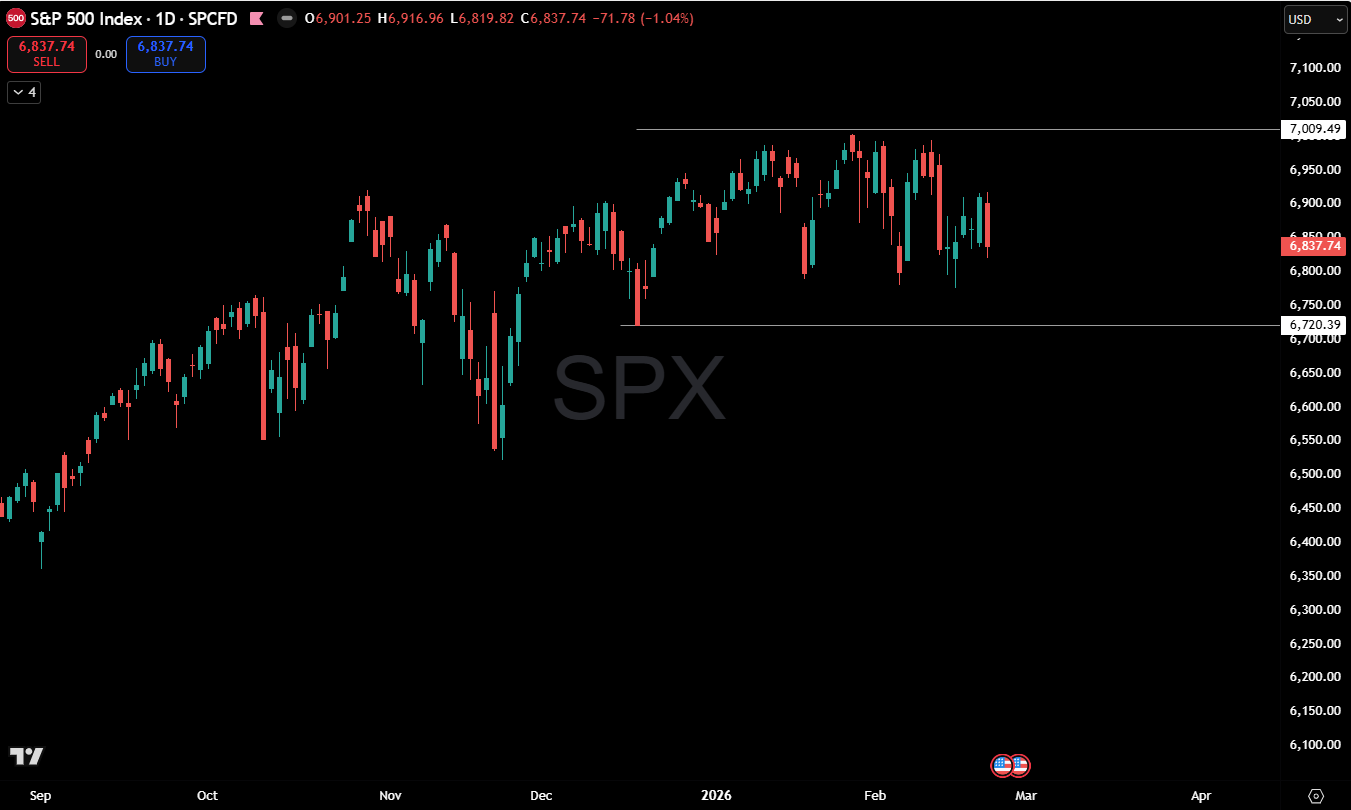
Fig 1 - SPX Dec 2025 - Feb 2026Why Day Trading Becomes Frustrating
Day trading requires follow through. You need strong opening and continuation. This behavior is not typical in consolidation.
You need big candles with follow through. But when the higher time frame is stuck in consolidation, lower time frames inherit that indecision.
Inside long term consolidation you will often see:
• Breakouts that reverse within minutes
• Moves that travel 30 to 50 points and stall
• Repeated trades above and below levels
• Overlapping candles with no conviction
This creates the illusion of opportunity without actual reward.
You can execute perfectly and still not get paid. Not because your system is broken, but because the environment is compressive rather than expansive.
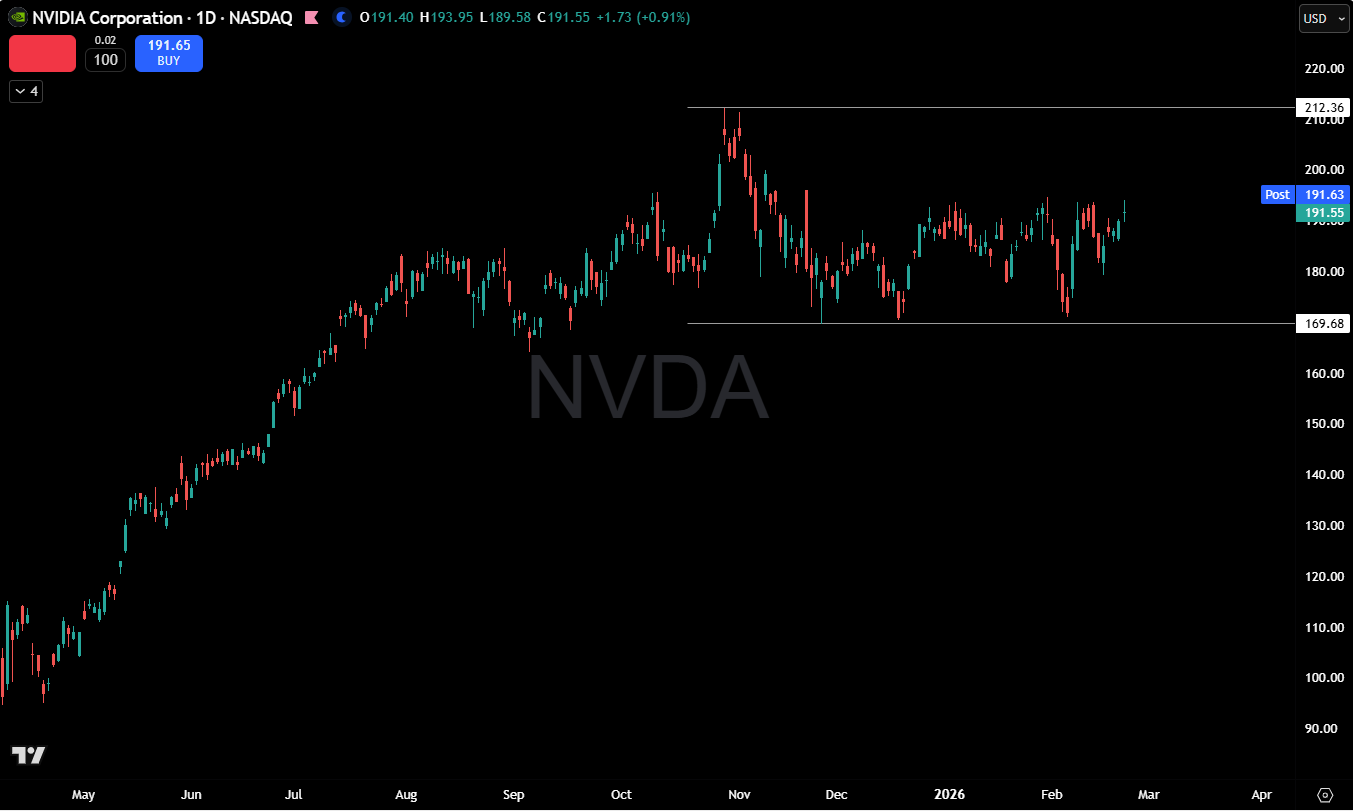
Fig 2 - NVDA Oct 2025 - Feb 2026
The Psychological Trap
Consolidation tests patience more than skill. You see the boundaries clearly.
You anticipate the breakout but instead, price flips and goes the other way.
This leads to:
• Forcing trades
• Holding losers expecting follow through
• Overtrading due to boredom
• Fighting the market instead of adjusting to it
Many traders damage their accounts not during trends, but during months of sideways price action where they try to trade range conditions as if they were trend conditions.
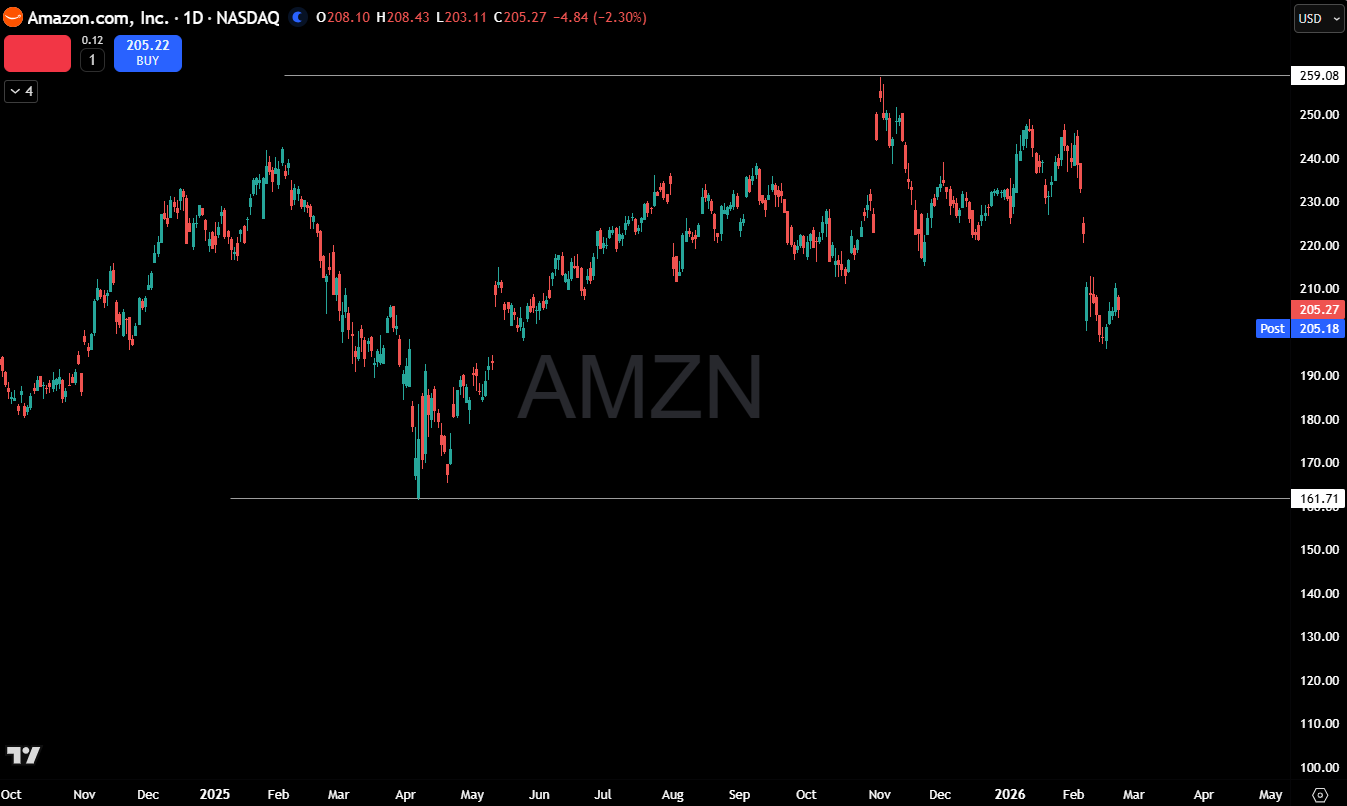
Fig 3 - AMZN April 2025 - Feb 2026
Why Trading Options Is Even More Difficult During Long Term Consolidation
Long term consolidation does not just affect futures traders. It can make trading options even more challenging. Options are not priced solely on direction. They are influenced by volatility, time, and the Greeks.
When the market has been consolidating for months, volatility often fades. When volatility fades, option premiums respond differently. You may see cheaper contracts, but cheaper does not mean better under these conditions. Time decay continues and liquidity (Number of contracts bought and sold) may be reduced. This can distort option pricing.
1. Low Volatility Limits Premium Expansion
Options require movement and volatility to generate strong gains. During prolonged consolidation:
• Volatility fades
• Premium increase becomes lackluster
• Even correct directional trades may produce small gains or even losses
You can be right on direction and still not get paid.
That is one of the most frustrating parts of trading options inside a range.
2. Time Decay Becomes a Larger Problem
If you are buying options, time decay is always working against you.
During a strong trend, price moves quickly and overcomes time decay.
Inside consolidation, price rotates. It may move slightly in your favor, stall, and then rotate back. While this happens, theta continues reducing the contract’s value. This is especially dangerous for short dated contracts or zero days to expiration contracts. In consolidation, time decay often wins and you lose money.
3. Breakouts Fail More Frequently
Options depend heavily on follow through. Inside long term consolidation:
• Breakouts frequently reverse
• False moves are common
• Follow through is weak
If continuation does not materialize quickly, the contract loses value rapidly.
This leads to:
• Chasing breakouts
• Overtrading
• Emotional frustration
• Buying premium at the wrong time
Without price moving quickly, options struggle to profit.
4. More Variables in an Uncertain Environment
With options, you must decide:
• Direction
• Strike price
• Expiration date
• Expected magnitude of move
That is already multiple layers of decision making.
Inside consolidation, where the market itself lacks clarity, those additional variables make execution even harder.
Futures may be emotionally challenging in a range, but options add complexity on top of compression.
The Adjustment Phase
If price has been consolidating for months, your strategy must adapt.
Inside consolidation:
• Reduce size
• Take profits faster
• Avoid chasing weak breakouts
• Wait for confirmed closes outside the range before expecting continuation
And some days you probaby should not trade at all. Most importantly, lower expectations. This is not the season for follow through.
The Bigger Picture
In consolidation, price will eventually break out of the range. When that happens, volatility comes back, follow through improves, and all traders will feel the difference immediately.
Until then, the objective is simple:
Preserve capital.
Preserve confidence.
Preserve discipline.
You do not have to win every market phase. You have to survive every market phase. The trend will come back. The question is whether you are still intact when it does.