Stock splits often make headlines and for good reason. They don’t change a company’s actual value, but they do change how the shares are divided among shareholders.
Let’s break it down in simple terms and look at Netflix’s latest move as a real-world example.
Reverse Stock Split: Going the Opposite Direction
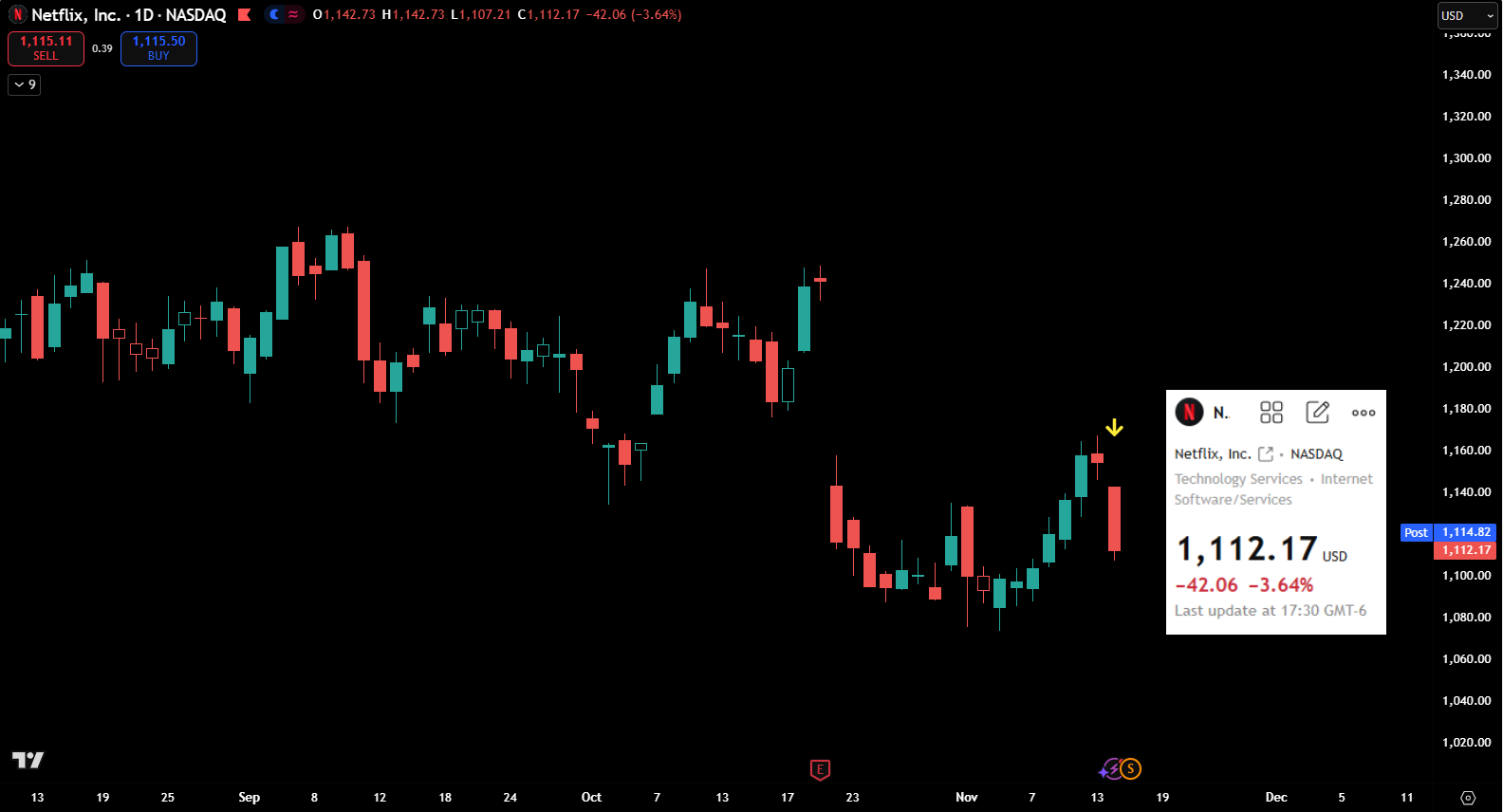
Fig 1 - Netflix shares fell $42 on Friday.
Let’s break it down in simple terms and look at Netflix’s latest move as a real-world example.
What Is a Stock Split?
A stock split happens when a company decides to divide its existing shares into multiple new shares. This lowers the price per share while keeping the company’s total market value the same. Think of it like cutting a pizza into more slices, you have more pieces, but the overall pizza hasn’t changed in size.
There are two main types of stock splits: forward splits and reverse splits.
Forward Stock Split: Making Shares More Accessible
Forward Stock Split: Making Shares More Accessible
In a forward split, each existing share is divided into multiple new shares. This is often done to make the stock price more affordable for investors.
For example, Netflix completed a 7-for-1 forward stock split in July 2015. At the time, its stock price was around $777.14 per share. After the split, shareholders received seven shares for every one they owned, and the price adjusted to about $111 per share.
Fast forward to November 2025, Netflix has now announced a 10-for-1 forward stock split. That means every existing share will become ten shares and the price you see on your screen will be adjusted accordingly to approximately $111 per share.
If Netflix had never split its stock back in 2015, its current share price would be around $7,784 per share. Crazy, right? 😱
This shows how splits can make shares more accessible to everyday investors while still maintaining the same total value for shareholders.
Reverse Stock Split: Going the Opposite Direction
A reverse stock split works the opposite way instead of creating more shares, it combines them to reduce the total number of shares outstanding. This usually increases the price per share.
Companies may use reverse splits to stay above exchange minimum price requirements or to attract institutional investors who avoid low-priced stocks. For example, in a 1-for-10 reverse split, ten shares at $1 each would become one share worth $10. The overall value doesn’t change just the structure.
The Bottom Line
Stock splits whether forward or reverse don’t change the company’s value or your ownership stake. They simply adjust the share count and price per share.
Companies choose to do stock splits to make their shares more affordable and accessible to a wider range of investors. As a stock price rises over time, it can become expensive for new buyers or small investors to purchase full shares. A split lowers the price per share while increasing the number of shares, allowing more people to participate without changing the company’s overall value. It also signals confidence in future growth and can improve liquidity by increasing trading activity.
Companies choose to do stock splits to make their shares more affordable and accessible to a wider range of investors. As a stock price rises over time, it can become expensive for new buyers or small investors to purchase full shares. A split lowers the price per share while increasing the number of shares, allowing more people to participate without changing the company’s overall value. It also signals confidence in future growth and can improve liquidity by increasing trading activity.
Netflix’s latest 10-for-1 split reminds us that these moves are often about accessibility and perception, not valuation. More investors can now afford a piece of the action, even though the company’s total market value remains exactly the same.
It is not uncommon to see the share price of a company rise post split, then fall shortly after. This is not trading advice just an observation.
It is not uncommon to see the share price of a company rise post split, then fall shortly after. This is not trading advice just an observation.
Fig 1 - Netflix shares fell $42 on Friday.